

Aims of the project:
To think about how we can approach the topic of healthcare from a radical feminist perspective?
To create a philosophical framework, that we can integrate into our artistic practice?
How can integrating a feminist philosophy into our research guide contemporary healthcare practices around women’s bodies?
In what ways is care embedded in medicine on both a practitioner and patient level?
It is 2025 (half a decade) - how can we define women's health over the next five years?
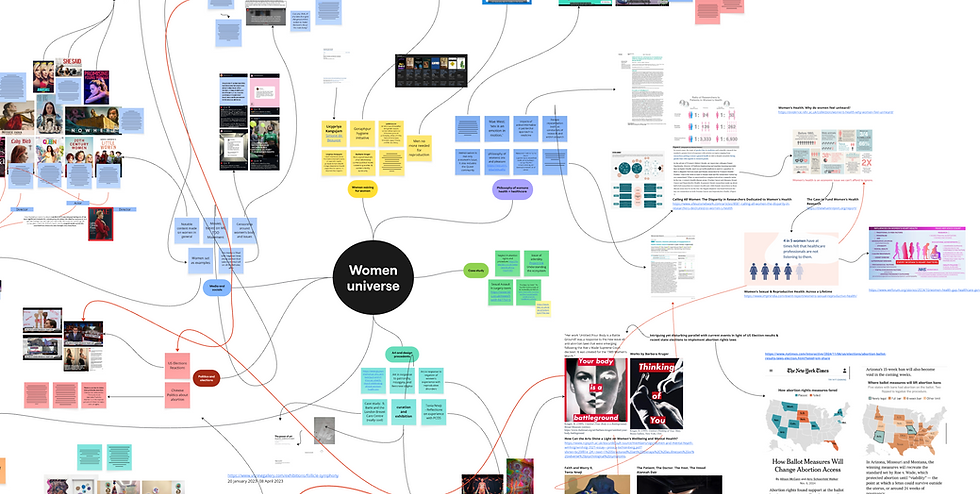
AcrossRCA was a module I took at the Royal College of Art. Collaborating with peers from different modules in assigned groups, I was a member of the Caring Society. Our group was called In Her Shoes, and I, along with my group, aimed to achieve a resolved outcome in response to women's healthcare today. Alongside students from Architecture, Contemporary Art Curation, and Design, our group identity was driven by a mutual desire to explore spatial, emotional, and social practice in female healthcare spaces.


Grounding our philosophy in a shared commitment to women’s care, our conversations centred on personal experiences of the sexed body. Through reflective discussion, we realised that many women first learn about how to care for their bodies, for example menstruation, PCOS, and abortion, through informal networks of friends and family, rather than through institutional support.
Oftentimes, testimony shared within communities is more readily trusted than formal medical advice, but why might this be the case?
As a multicultural, all-female group, we considered how oppression within healthcare systems can be compounded by race, class, and cultural stigma, often leaving women marginalised or misdiagnosed. Institutional healthcare, such as the NHS, though largely delivered by well-intentioned, compassionate, and dedicated staff, struggles under systemic pressures, limited funding, overworking and time shortages. On the other hand, information passed between peers and family is more accessible, culturally sensitive or relatable, and easier to access. Our project recognised the value of both clinical expertise as well as community and wisdom, exploring how the medicalisation of women bodies can be approached on both an interpersonal and institutional level.